
NDLP at Bendemeer
Explain why Bendemeer uses technology for learning. Operational device matters are covered on the other pages.
What is the National Digital Literacy Programme?
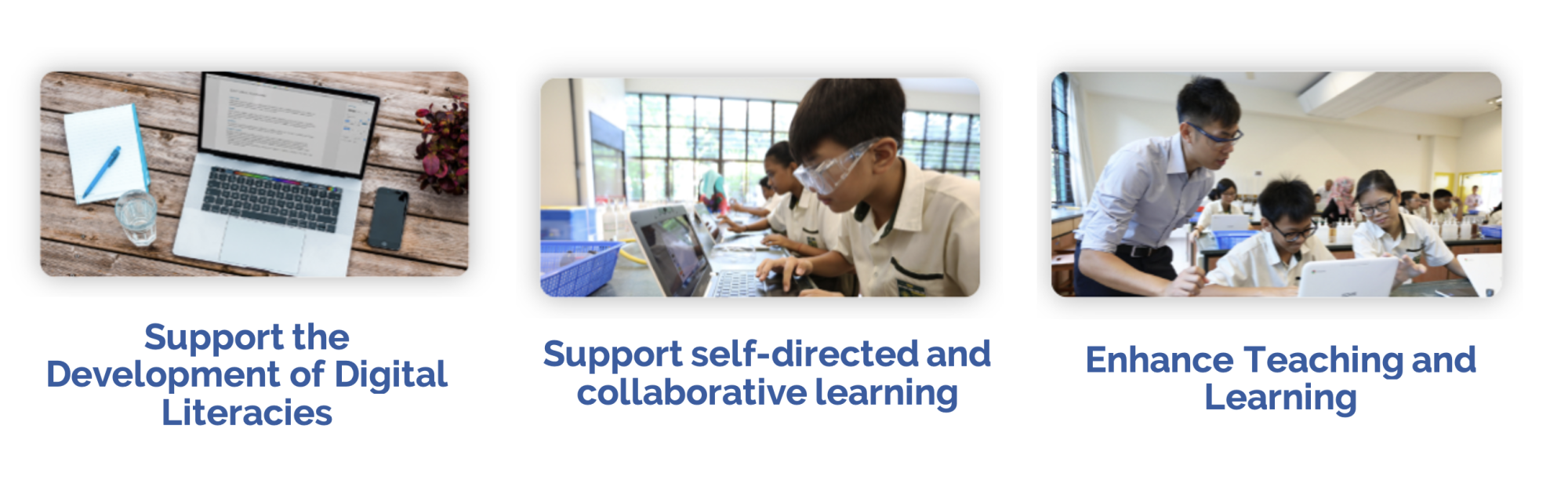
The Ministry of Education launched the National Digital Literacy Programme (NDLP) in 2020 to strengthen students’ digital literacy and prepare them to thrive in an increasingly digital world.
The Personalised Digital Learning Programme is an important part of the NDLP. Under this programme, secondary school students use a school-prescribed Personal Learning Device (PLD) together with SLS and other educational technology to support learning in and beyond the classroom.
MOE reference: Digital literacy and technological skills — https://www.moe.gov.sg/education-in-sg/educational-technology-journey/edtech-masterplan/digital-literacy-and-technological-skills (opens in new tab)
Digital literacy
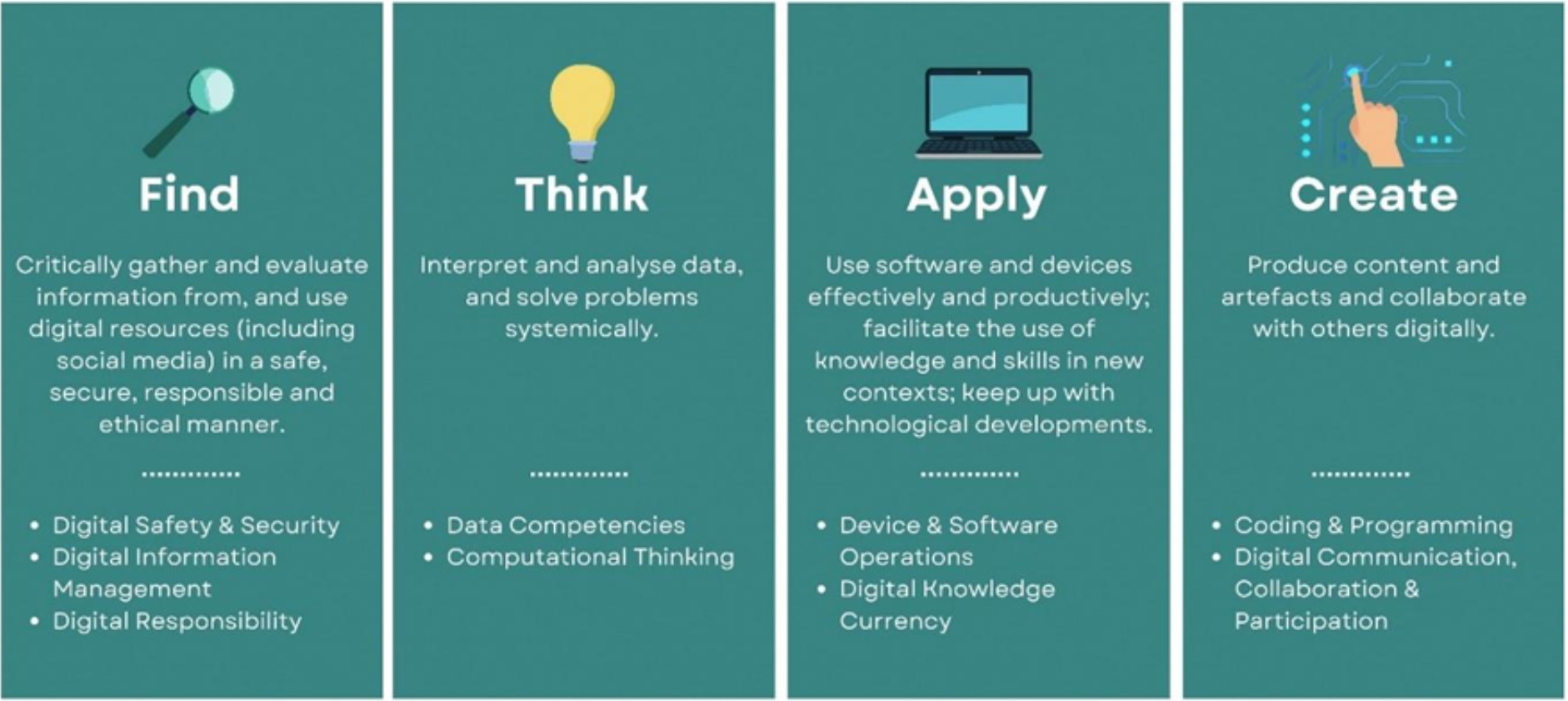
Digital literacy is the knowledge, skills and dispositions that enable students to use digital technologies confidently, critically and responsibly. Students learn to Find, Think, Apply and Create with technology.
Find, Think, Apply, and Create
Component | What students learn to do |
Find | Locate relevant digital information and resources efficiently. |
Think | Evaluate information, consider consequences and make informed decisions. |
Apply | Use appropriate digital tools and strategies to complete tasks and solve problems. |
Create | Develop, communicate and improve ideas, products and solutions using technology. |
Developing digital competencies
Under the EdTech Masterplan 2030, the Find–Think–Apply–Create framework is further unpacked into digital competencies. These competencies are developed through purposeful learning experiences across subjects and school programmes.
Digital literacy and technological skills: 9 Digital Competencies
Digital Competency | Concise description based on MOE |
Digital Safety & Security | Understand online behaviour and know how to protect oneself online. |
Digital Responsibility | Use technology safely, responsibly and ethically, with respect for oneself and others. |
Digital Knowledge Currency | Keep up to date with technological developments and digital resources. |
Computational Thinking | Use computational thinking and technological tools to solve problems and test solutions. |
Digital Information Management | Locate, evaluate, distil and synthesise accurate, credible and relevant information. |
Digital Communication, Collaboration & Participation | Use digital platforms to communicate, connect and contribute constructively to shared goals. |
Data Competencies | Read, interpret, manipulate, analyse and present data meaningfully. |
Device & Software Operations | Understand how devices and software work and use them effectively. |
Coding & Programming | Use programming or prompt engineering to create artefacts or develop, test and debug solutions. |
MOE reference: Digital literacy and technological skills: 9 Digital Competencies — https://www.moe.gov.sg/education-in-sg/educational-technology-journey/edtech-masterplan/digital-literacy-and-technological-skills (opens in new tab)
Technological skills
MOE defines technological skills as the ability to understand and use specific technologies to solve problems and achieve practical goals. Its initial focus is AI literacy: helping students understand AI, recognise its benefits, limitations and risks, and use AI tools effectively for learning and daily life.
Bendemeer’s vision for digital learning
We aim to empower every Bendemeerian to be an active learner who is future-ready, embraces challenges with a “can-do” attitude, and uses technology to think critically, make informed decisions and solve problems creatively for self and others.
What students experience
Access and organise learning resources using SLS and other approved platforms. Receive timely feedback and use it to improve their learning.
Collaborate and communicate respectfully with classmates and teachers.
Locate, evaluate and synthesise information from digital sources.
Use data and digital tools to investigate and solve problems.
Create and improve digital products that communicate ideas effectively.
Use artificial intelligence critically, ethically and responsibly.
Plan, monitor and reflect on their learning.
Learning beyond the classroom
The PLD also supports Home-Based Learning, Blended Learning and Student-Initiated Learning. Students can review past lessons, access digital resources, explore areas of interest and use productivity tools such as calendars and digital notes to manage their learning.
MOE reference: Singapore Student Learning Space — https://www.moe.gov.sg/education-in-sg/student-learning-space (opens in new tab)